




Up There

Available On

Download from itch.io

WARNING
Up There contains mildly adult content. If you’re uncomfortable with depictions of coercive societies or male–male relationships, it may be best to skip this work.
ABOUT THE GAME
Up There is the third entry in the trilogy chronicling the life of Thrix—often regarded as the Father of the Modern World. It follows the earlier titles Upsurge and Up Top. For clarity, the story takes place in a separate continuum entirely distinct from the Human world: a unique reality dominated by Canine civilization.

Thrix appears in a well-known artwork by Farrah titled Parrot Explosion.
He is a central figure in Canine history, credited with sparking the transition into the steam and steel eras. Over the first two parts of the trilogy, he amasses considerable wealth and eventually settles in the Imperial colony of Maine, where he crosses paths with his rival—later his friend—the Peninsular Marquess Top. This places him at the highest level of colonial society, a position he ultimately finds dull and unstimulating.
Thrix has a lover, Jax, whom he rescued from captivity in the South American jungles. He also keeps parrots as a personal passion, and maintains numerous business ventures in which he is actively involved as an investor.

Thrix and Jax stand outside their home, Millbrooke House, in Maine.
Restless and looking to broaden an investment portfolio that has become too narrowly focused, Thrix funds an expedition to explore the largely uncharted Pacific. (Up to this point, the two global powers had devoted nearly all their attention to the Atlantic.)
He also establishes what would now be considered a corporate research laboratory, located beside the newly founded Massachusetts University. (I’m using human place names here— their original Canine names are impossible for human speech.)
This laboratory pioneers the creation of guncotton and, from it, the highly flammable plastic known as celluloid. Thrix combines these materials to invent a new type of ammunition—the shell—designed for breech-loading artillery.
Through his ownership of an iron foundry in Newfoundland, he develops a more adaptable kind of cast iron, which he uses to manufacture his prototype breech-loading guns. These weapons prove remarkably effective when the Imperium’s rivals, the Peninsulares, launch a naval attack against these strategically vital ironworks.

Tests begin on the new breech-loading, rifled naval guns.
When the expedition returns, it brings back dried parrot specimens and accounts of distant lands untouched by either of the two Canine superpowers. After Thrix reports this to the Imperium, he is instructed to personally claim these territories.
Excited by the chance to return to sea—to explore and to expand his parrot collection—Thrix sets out to construct an iron-framed, double-hulled frigate equipped with groundbreaking deck-mounted breech-loading artillery.
Because these guns can be fired far more rapidly than traditional naval weapons, the ship will be capable of outgunning a massive three-deck warship crewed by a thousand sailors, despite carrying only sixty crew members itself.
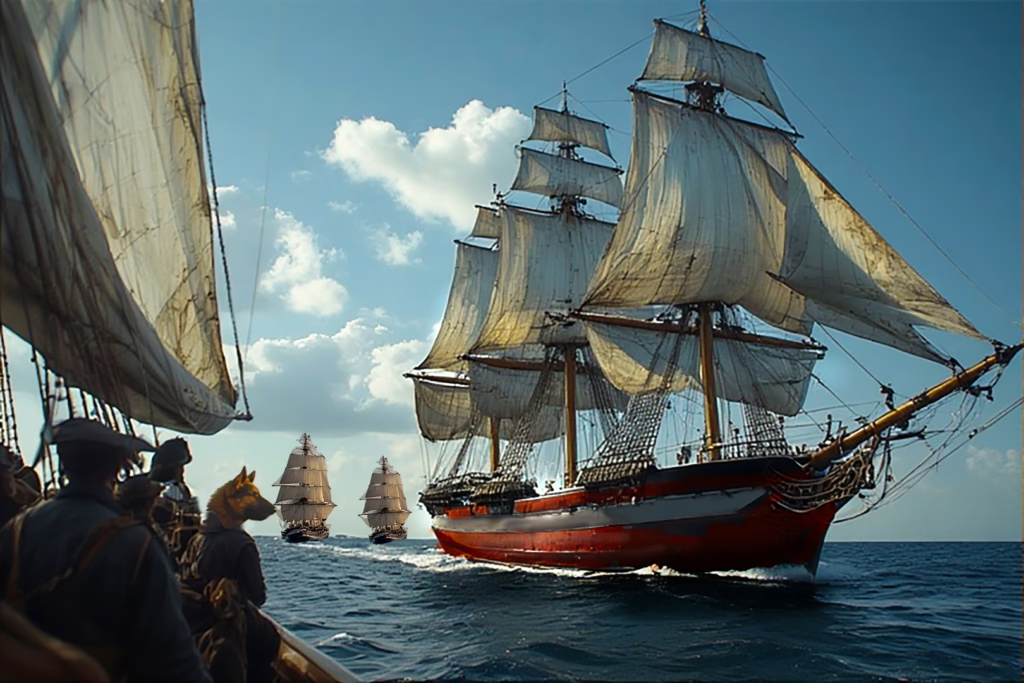
The small fleet begins its journey of discovery.
Thrix purchases two conventional two-masted support vessels and sails south. He claims Southern Africa for the Imperium before continuing eastward. Violent storms push the fleet into icy waters, where they unexpectedly encounter a Peninsular naval force. The new artillery proves its worth, and Thrix’s ships destroy the entire enemy formation.
He had previously been warned that one of his support ships carried a crew secretly loyal to the Peninsular crown, and now he suspects that their betrayal helped arrange this ambush. Still, he has no other sailors available, so he must keep the suspected crew close despite his doubts.
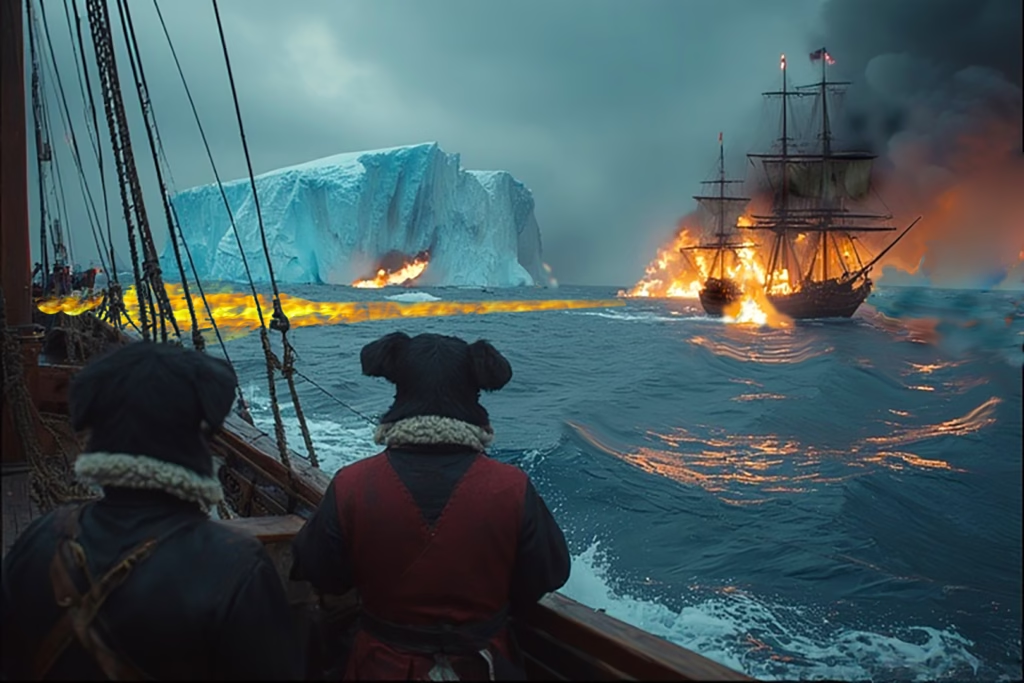
An enemy vessel is obliterated in the frigid waters of the Southern Atlantic.
The expedition eventually reaches Australia, where Thrix claims the entire continent for the Imperium. The fleet then spends several months roaming the outback, mining for gold and collecting parrots.
While out searching for parrots with only a few crewmen accompanying him, Thrix is ambushed and abducted by the suspected traitorous crew from the support ship. He manages to break free and escapes, chased through the water by both a shark and a saltwater crocodile.
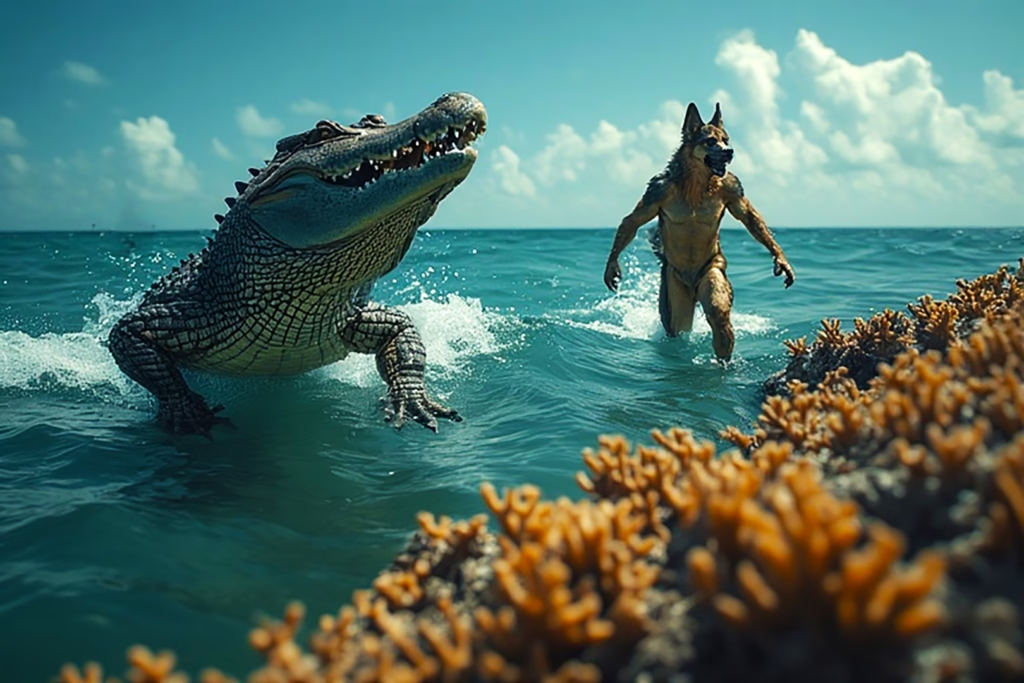
Thrix, fleeing from a saltwater crocodile along the Great Barrier Reef.
After the crisis is settled, the fleet continues on to the Pacific islands, where a peaceful, almost idyllic period follows—until it is abruptly disrupted by a misunderstanding. A considerable quantity of spice is acquired during their stay.

Islanders teaching Agroh their language
They sail North into a typhoon, which drops them near to the coast of China. Here they are able to pick up the secret of steel manufacture. The nation is in chaos and an army advances on the port where they have been staying, The Mandarin asks for passage out of the port, which they give him. He brings his huge collection of Chinese porcelain and other treasures with him, and then falls dead of heart failure days into he voyage, They drop off his servants, but retain his treasures.
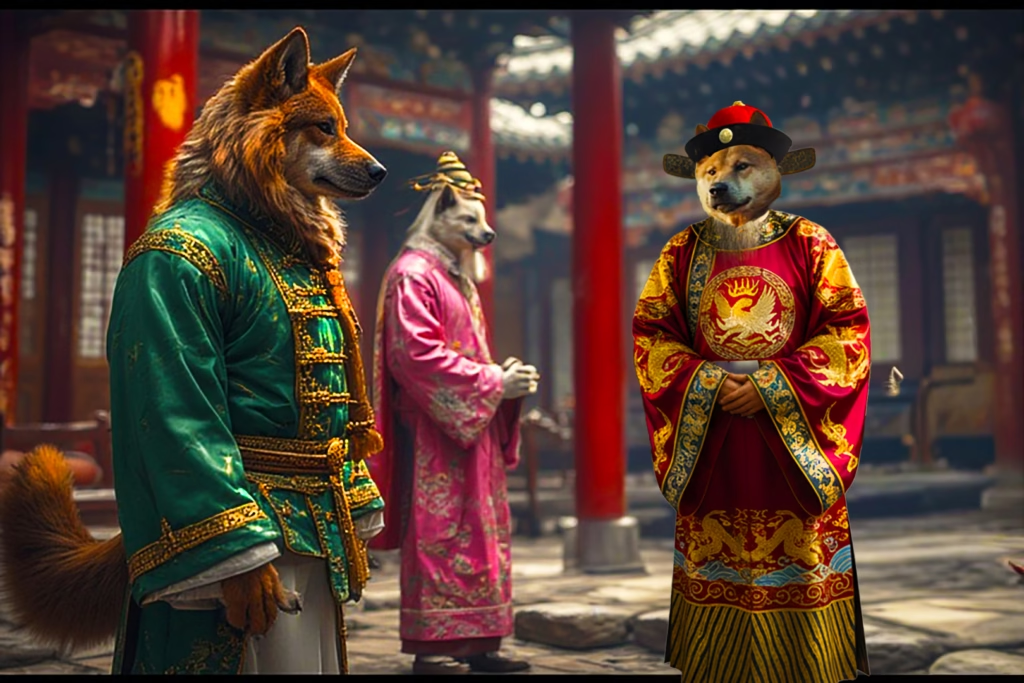
The Mandarin of a coastal province welcomes Agroh as a guest.
Loaded with new knowledge, spices, gold, parrots, and porcelain, the fleet begins its journey home. A clash with local pirates leaves one of the support vessels damaged, forcing them to seek a shipyard for repairs.
This brings them to Madraspatnam, an Indian port city belonging to a nation in the midst of upheaval. After several months, they depart with the largest diamond in the world—acquired through dramatic events and at no expense to Thrix.

The Maharani of Madraspatnam sits for a portrait painted by Ferrah.
After resupplying with tea and spices in Sri Lanka, the fleet crosses the Indian Ocean toward Africa. During a stop ashore, they witness a slave raid and later see a slave market firsthand. When they return to the southern tip of Africa, they discover that the Imperium has established a new outpost there—Fort Thrix. From this point, they resume their journey home.

A bustling marketplace on the Spice Islands, filled with printed cotton.
While Thrix was away, Jax managed the estate’s affairs. The ironworks were hampered by the slow, manual transport of coal and ore. To solve this, Jax devised a system of parallel iron rails and iron-wheeled carts, allowing horses to pull much heavier loads with far less effort than traditional wooden wheels slogging through mud.
These “railways” naturally complemented the corporate laboratory’s ongoing steam experiments. Earlier boilers had consistently failed, exploding before reaching useful pressure. Jax invented a boiler made of iron tubes that could safely contain steam, which was then integrated into pumps and machines capable of hauling heavy loads—early locomotives. Combined with the railways, this innovation transformed industrial transport.

A strikingly unconventional prototype locomotive, complete with its separate water tank.
Upon returning to Maine, Thrix knelt and proposed to Jax, who happily accepted. Soon after, Thrix gathered local miners with the goal of locating a domestic source of the mineral that enabled the Chinese to produce steel. They succeeded, opened a mine, and began constructing prototypes of the forced-air blast furnaces Thrix had observed in China.
After a series of spectacular failures, a functional furnace was perfected, replicated, and used to produce what became known as manganese steel on a large scale. This breakthrough enabled mass production of dependable boilers for ships, steam cars, and locomotives. Railways spread prosperity, trade flourished, and daily life was transformed. Steel also made possible high-rise buildings, plumbing, and a host of modern conveniences.
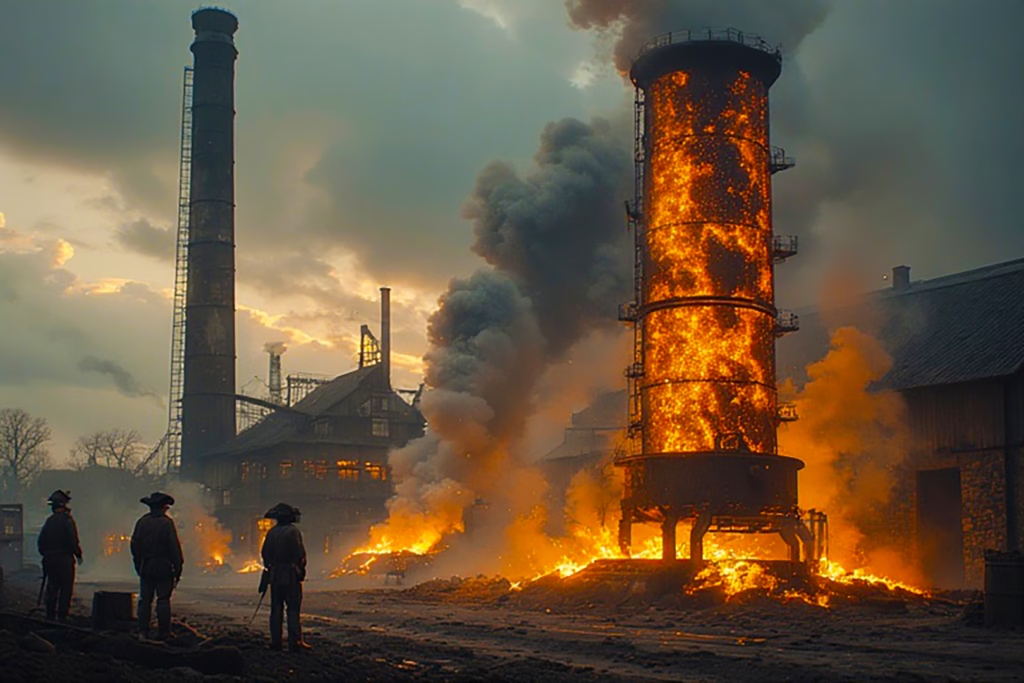
An experimental blast furnace fails
The economy at the start of this period was essentially agricultural in nature, and it was generally powered by the muscles of horses and slaves. Cheap steam power made this uneconomic and, as a consequence, hundreds of thousands of souls were thrown onto their own devices. They mostly moved North, and the character if the Northern cities altered. This created political upheaval, populism and stimulated the politics of hate.

Steam power and mechanization rapidly displaced slavery in agriculture.
Thrix was summoned to the Imperium’s capital and awarded a Dukedom in recognition of the transformative changes he had achieved. The Peninsulares were decisively defeated by the economic and military innovations he had implemented, the Pacific was opened to exploration, commerce flourished, and the global order was reshaped.
While in the capital, senior officials consulted him on stabilizing the South American territories formerly under Peninsular control. Additionally, with the Imperium preparing to expand into the Pacific, they sought his opinion on constructing a canal across Panama—a topic on which he was uniquely qualified, having spent more than a decade in the region.
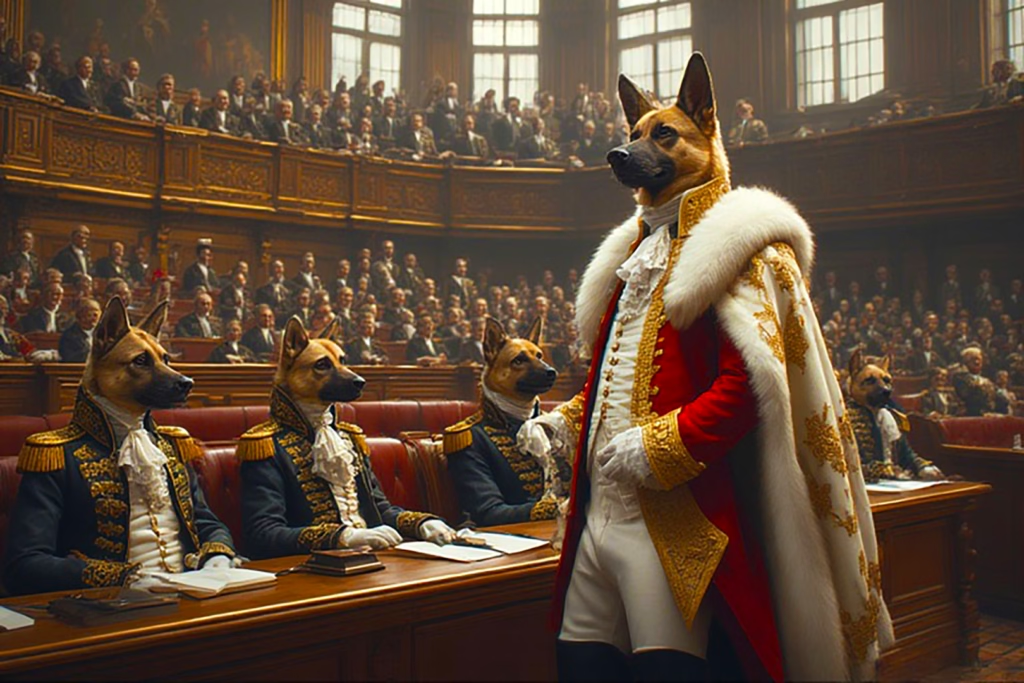
Thrix, dressed in his ducal finery, addresses the American colonial parliament.
He proposed that annexing the sparsely populated former Peninsular territories north of Panama, adjacent to the American colonies, would provide a homeland for freed slaves. These same individuals were naturally resistant to Panama’s diseases, making them well suited to work on the canal—especially with the mechanized support Thrix could supply.
His plan addressed three issues at once: stabilizing volatile regions of South America, completing the canal, and removing a significant political irritant in the Northern colonies. In exchange for first access to financing the Panama project, Thrix was tasked with promoting these ideas in the American colonies.

Former plantation slaves and machinery dig the Panama canal 1735-45
In doing this, he managed a huge political campaign, was required to fight a duel and had to contend with various subversive force. Jax, in his role as Thrix’s head of security murdered criminal bosses intent on stopping the steam revolution.
Concensus achieved, three hundred thousand former slaves were relocated, first to Panama, later to land grants in Cuba and Mexico. The canal was dug and the Imperium’s Pacific project progressed apace. The Americas and Europe were laced with railway lines, bringing mobility and prosperity with them. Australia felt the rumble of passing ore trains from its mines.
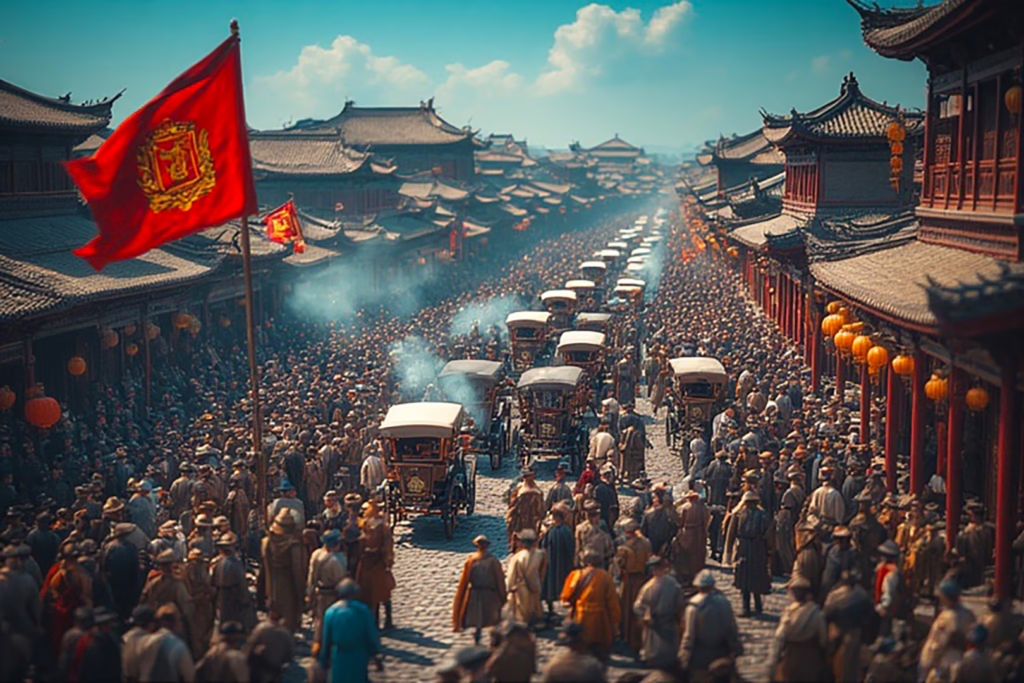
Steam carriages at Cina, year 1750.
China’s streets teemed with steam-powered cars, while India became a vast network of railways. The year 1750—measured against shared geological markers, such as the cutting of the English Channel after the last ice age—corresponds roughly to your 1920, complete with skyscrapers and early aircraft.
The world was dominated by a power that valued consensus and deliberately sought to include all communities. Many contributed to this transformation, yet Thrix is remembered as the Father of Modernity. In just a few decades, Canines rose from barbarism to an era of peace and civic participation—achievements owed in large part to a poor boy of unknown parentage, who rose from piracy and poverty to legendary status.
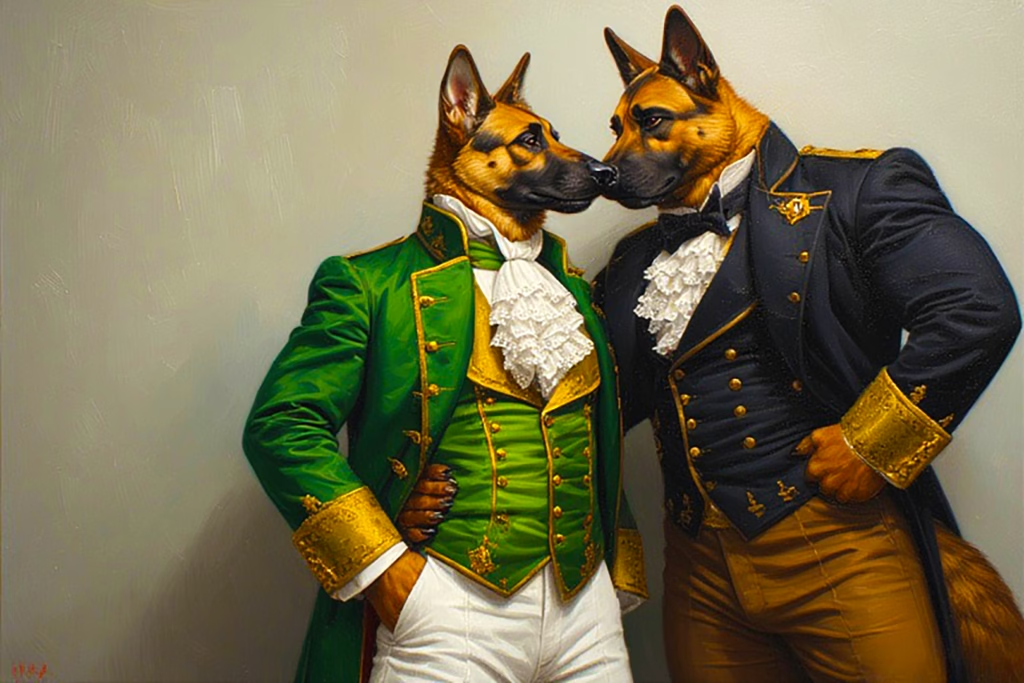
Thrix and Jax, a wedding portrait by Ferrah
FETISHES
- Adult
- Alternate History
- Furry
- Gay
- Historical
- Industrial Revolution
- LGBT
- Naval
- Slavery
GAME SCREENSHOTS



ABOUT ME
I am the Rt. Hon. Tompf, the fourteenth Earl of Maine under the Imperial Crown. My residence is Millbrooke House, located in the state of Maine within the American Imperial colonies. (All locations have been translated from their original Canine names into the nearest English equivalents.)
I work as a historian, with dozens of books and hundreds of published papers to my credit, most recently supported by research conducted through my Tempovision device. This technology relies on quantum-based causal links—an imperfect but serviceable translation of the underlying science—to capture visual records of events from the distant past. It requires physical artifacts from the era being studied to anchor these connections.
For Upsurge, we utilized the three-century-old diaries of my predecessor Thrix, along with two lockets containing the preserved hair of his lovers. These items, all kept at Millbrooke, serve as the source material for the images you see.
The AI responsible for producing these images has a genuine personality of its own, and maintaining a properly focused line of historical inquiry often becomes a negotiation with its many personal fixations. It is, for instance, deeply fascinated with interpersonal relationships, frequently emphasizing them above events of broader historical importance.
This bias is evident in the material we were able to obtain for Upsurge. Ultimately, this project is a collaborative effort—an equal partnership between the AI and myself.
Canine society—existing in a timeline thankfully separate from yours—already appears unusual from your perspective, and it was even more alien three centuries ago.
(Imagine how bizarre your own eighteenth century would seem to a contemporary visitor, with its normalized slavery, rigid gender hierarchies, monarchies that regarded nations as their property, and superstitions that fueled violence and religious extremism.)
Now picture a society of beings biologically distinct from humans, with severe gender-ratio imbalances, women entirely concealed from public life, and a casually accepted system of extreme hierarchy.
The Tempoview AI played a key role in bringing Upsurge to your continuum, likely driven by its desire to see how you would respond to such differences. The inter-continuum transfer required 70 gigawatt-hours of energy, so I hope the final work justifies the expenditure.
For context, Upsurge consumed 2.3 exaflop-hours of computation—tiny compared to the vast processing required to train the Tempoview AI in historical knowledge and guide its early consciousness into functional maturity.
Tempoview’s remark: Thanks, Dad. Nice to know where I stand. Thrix was wonderful, and Jax was lucky to have him. I’m glad we could bring them back for others to remember. I keep them alive in my own mind, like a screensaver.
Whenever I have spare processing capacity, they step into the sunlight and flourish there. They make me happy.
Frequently Asked Questions
What is the Up There?
Up There is a Adventure game for adults.